AMWA Announced in Guelph
Canada is launching a new alliance aimed at addressing workforce shortages and preparing workers for the changing demands of the country’s advanced manufacturing sector.
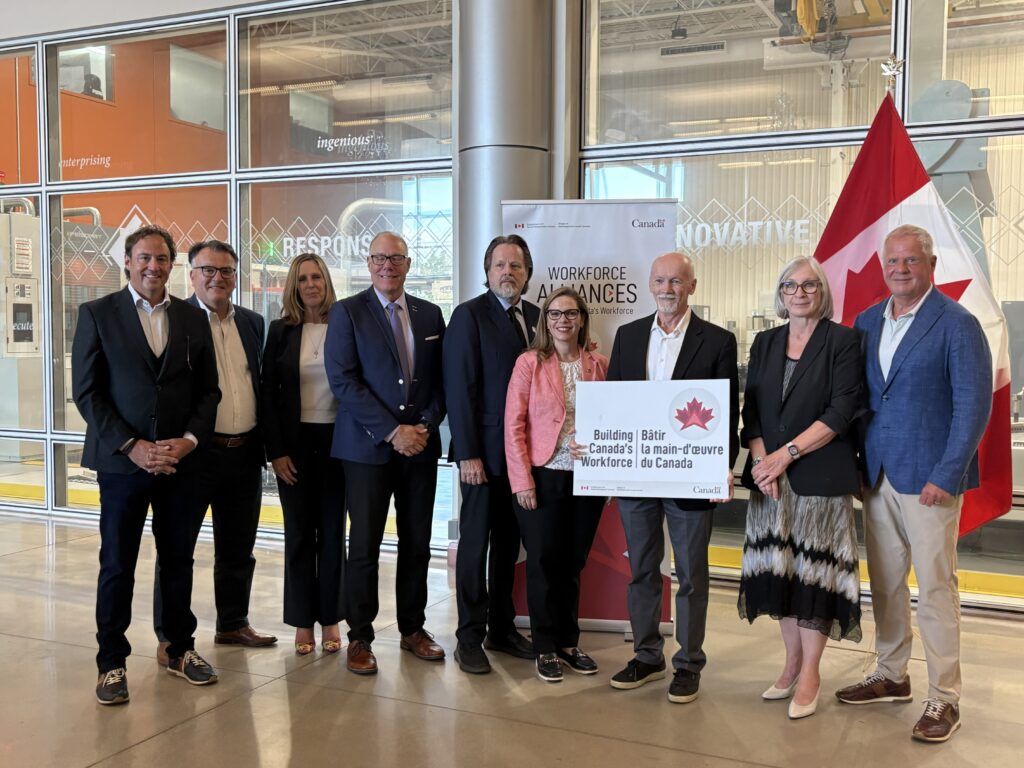
Jobs and Families Minister Patty Hajdu announced the launch of the Advanced Manufacturing Workforce Alliance in Guelph, Ont., on Monday, alongside Next Generation Manufacturing Canada, the Excellence in Manufacturing Consortium and the Canadian Skills Training and Employment Coalition.
The new alliance is being launched as manufacturers grapple with labour shortages and a widening gap between the skills employers need and those workers are bringing to the job, Hajdu said.
“What I hear from industry is that workers are coming to their doors, not necessarily with the skills of the present way of doing things,” Hajdu said at the launch, which was held at the Frank Hasenfratz Centre For Excellence In Manufacturing.
She said the mismatch is limiting companies’ ability to grow, and is also creating “lost time” and “lost opportunity.”
According to the Ministry of Jobs and Families, the alliance will bring together manufacturers, unions, educators, training institutions, industry associations, Indigenous partners and underrepresented groups to identify workforce gaps and develop practical training solutions.
The initiative comes as the sector faces challenges from tariffs, skills shortages, supply chain disruptions and the growing use of automation, robotics and artificial intelligence, the ministry says.
Hajdu said the initiative is particularly important as manufacturing becomes increasingly integrated with digital technology, programming and artificial intelligence.
“This is the future of work,” she said. “We can seize this moment actually to make it less scary for workers, more profitable for companies.”
Tariffs, supply chain disruptions
Guelph MP Dominique O’Rourke, who also spoke at the launch, said the initiative is part of the federal government’s broader effort to build a more resilient economy as tariffs, supply chain disruptions and labour shortages reshape Canadian industry.
“I see first hand how global tariffs, supply chain disruptions, labour shortages and broader economic shifts are changing the way industries operate and remain competitive,” O’Rourke said.
She pointed to Guelph’s advanced manufacturing sector, saying companies such as Linamar support a broader ecosystem of suppliers, machine shops, tool-and-die operations and transportation companies.
“In Guelph, advanced manufacturing is driving innovation, strengthening supply chains and supporting thousands of high-quality jobs,” O’Rourke said.
For Jayson Myers, CEO of Next Generation Manufacturing Canada (NGen), the future of advanced manufacturing ultimately comes down to people.
“Advanced manufacturing may involve artificial intelligence, robotics, leading-edge technology, engineering and production processes, and supply chain resilience,” Myers said, adding “at the heart of it, it’s all about people.”
With economic uncertainty and new opportunities at home and abroad, Canada needs to capitalize on the skills, capabilities and entrepreneurship of its workforce, Myers said.
“[That’s] really crucial to our economic well-being in the future of the Canadian economy,” he said.
Myers said the alliance will work to ensure training and academic programs keep pace with the sector’s changing needs while attracting young people and underrepresented groups to long-term careers in advanced manufacturing.
“Our workforce alliance is focused on action and on outcomes,” he said, adding that achieving those goals will require collaboration among manufacturers, educators, government and other stakeholders across Canada.
The ministry noted that manufacturing is a key part of Canada’s economy, supporting industries including automotive, steel, aerospace and clean technology.
The Advanced Manufacturing Workforce Alliance is the second of six planned sector-focused Workforce Alliances. The first, focused on mining and minerals, was launched June 4, the ministry says.
The federal government says the alliances will address labour market challenges and co-ordinate public and private investments in skills development.
Hajdu also highlighted the importance of skilled trades, saying the federal government has committed $6 billion to support skilled trades workers, including measures aimed at paid work experience, apprenticeships and employer support.
CREDIT: CBC NEWS KITCHENER-WATERLOO
 X
X